
The study that started Euforik
Through 2025 we interviewed more than 40 companies across Europe about how they run strategic sourcing. Nearly all of them already had a supplier base, some of them thousands of companies deep, and nearly all of them had the same five problems with it. This is what they said, what we had wrong going in, and what we built afterwards.
The Euforik team · 2025 · 10 min read
Here is a question we ended up asking in almost every interview. How many of your suppliers are still certified for the thing you buy from them? Nobody could answer it. Several of the people who could not answer it had a register with four thousand companies in it.
Then the follow-up: what happens when a project needs something nobody in that register can do? Every answer was some version of Google, a colleague who might know somebody, a fair in the spring, and a spreadsheet.
We went in assuming the problem was that companies cannot find suppliers. That turned out to be about a third of it. The rest is that the suppliers they already have sit in a system nobody trusts, unchecked against the requirement, with every process that touches them done by hand.
Through 2025 we sat down with more than 40 companies across Europe to work out which of that was real: how requirements get set, how suppliers get found and qualified, how quotes get compared, who signs, and what the software they already own is doing while all of it happens.
Most of the companies we spoke to buy physical things, where picking the wrong supplier is expensive and slow to undo.
What we were trying to disprove
We did not go in neutral. We went in believing that sourcing is badly served by the software built for it, and we wanted the interviews to kill that. Four questions:
Is finding a new supplier still hard? Everyone has a base already. We wanted to know what actually happens on the day that base does not cover the need.
Does anyone know what is in their own register? If companies are on top of certifications, contracts and prices across the suppliers they already use, then most of what we imagined building is not needed.
What happened to the software? Most of these companies had bought something. We wanted to know what it is used for today, not what it was bought for.
Would anything beat a spreadsheet? The spreadsheet is the incumbent. If people prefer it for good reasons, we wanted to hear those reasons before writing any code.
The honest hope was to be told this was solved and that we should go and do something else. It would have been a cheap way to find out.
How we ran it
We talked to more than 40 companies in Europe. The smallest had one person doing sourcing next to four other jobs. The largest turns over more than 10 billion USD and has a procurement department with its own org chart.
Where a company let us, we talked to two or three people inside it, because the person who signs and the person who searches describe different jobs. The buyer says the process took three weeks. The engineer who had to produce the candidates says it took three months and started well before anyone opened a ticket.
There was no script. We asked people to walk us through their last sourcing project, from the first need to the signed agreement. What was open on the screen. Where the weeks went. Who they picked and how they found them. Then we asked what they wished existed.
Participants
More than 40 companies, all based in Europe
Size range
One person sourcing part time, up to groups above 10 billion USD in revenue
Industries
Manufacturing, technology, pharma, retail, construction, logistics, energy, finance, aerospace and defence
Who we spoke to
Procurement leads, project managers, engineers, founders, finance
Method
Open interviews, no script, run through 2025
This is not a survey
We did not sample anything properly, and we are not going to pretend it generalises to all of Europe. It is 40 long conversations, biased towards companies willing to give an hour to three strangers asking about procurement. We think the patterns are real. We would not put them in a chart.
What people said
Five problems came back from nearly every conversation, whatever the size of the company and however many suppliers it already had.
01
They cannot find new suppliers when they want to
Four thousand suppliers on file does not help when a project needs a capability none of them has. At that point the search starts in a browser and ends in a spreadsheet, exactly as it would have in 2005. More than one person told us they had stopped looking and given the work to whoever was already on the list.
02
The base they already have is not really managed
Forty suppliers or four thousand, the answer was the same: nobody is quite sure what is in there. Who is still certified. Whose contract renews in March. Who has been drifting their prices up for three years while nobody checked the market. Monitoring was a calendar reminder if it existed at all, and nothing intelligent was watching any of it.
03
Suppliers are not checked against the actual requirement
Everybody knows they should verify capability, certification, financial health and legal standing against the specific thing they are buying. Almost nobody does it properly, because collecting that data for one supplier takes days and there are twelve to look at. So the check shrinks to a call and a feeling, and the problem turns up later in the project.
04
Running an RFx is tedious rather than hard
Write the RFI, send it, chase the four who did not reply, read what comes back, retype the numbers into a comparison, then notice that two suppliers quoted tooling and one did not. Nobody described this as difficult. They described it as annoying, which is worse, because it is exactly the kind of work that should not still be manual.
05
They want AI, and what they were sold is a plastic add-on
This was the most consistent opinion in the study and the most impatient one. People want this work done by something smarter than a filter. What arrived in their existing systems was a chat box in front of an old index, returning companies that did not exist. It did not feel built in, it felt stuck on, and once it is wrong twice nobody opens it again.
The explanations that do not hold up
We had a few tidy explanations for all of this before we started, and other people offered us more. Most of them did not survive the interviews.
It is a training problem
This is the standard answer from people who sell procurement software. In most of these companies there was at least one person who knew the system well. They still did the real work in email and a spreadsheet and typed the outcome back in afterwards. When your best trained user routes around the tool, training is not what is missing.
The suites already cover this
They cover part of it. Every source to contract product has a supplier module and most of these companies were using theirs, as a filing cabinet. It records what you decided. It does not tell you that a certificate lapsed in August, that a price has drifted since the last time anyone looked, or that nobody on the list can do the process this project needs.
It is a database problem
This is the one we were most wrong about. We assumed the missing piece was a bigger list. Then we sat with companies holding four thousand suppliers on file who still could not tell us which ten could make the part. Coverage matters, and ours is real, but the list was never the hard part. Reading four thousand company sites in six languages to work out which ten qualify is the hard part.
AI has already solved this
By 2025 nearly everyone had an AI feature in something they already pay for. What people told us about it was consistent: a plausible list of companies, a few of which did not exist, none checked against the actual requirement, and no way to see why any of them were on the list. It saves the first hour and costs you the next three. An AI bolted onto a system designed for filing does not become a sourcing tool.
What happened to the software they bought
Plenty of these companies own procurement software. Big source to contract suites, paid for, rolled out, with a project plan and a training week behind them.
Most of it sits unused. Whole modules empty. Workflows configured once, years back, by someone who has since left. The system holds the record of the decision and almost none of the work that led to it.
The reason was almost never that the software could not do the job. It was that doing the job in the software took longer than doing it in email. So the work moved to email, phone calls, Google and a spreadsheet, which is where it had been all along.
People are not on a spreadsheet because they are behind. They are on it because it is faster than the system they paid for.
The tools and methods used for supplier search have in many cases remained unchanged since the early 2000s. Google, personal networks, industry events, and spreadsheets. This despite extensive technological development in every other part of the business.
Why the suites were not carrying it
Every company that had bought one had a reason it was not doing the work. We heard five, and most companies gave us more than one.
Too expensive
Priced for a large procurement department. Per seat, per module, plus an implementation fee that in a few cases cost more than the first year of licences.
If you are a mid sized manufacturer that is a hard number to defend internally, and the companies that did pay it often used a small part of what they bought. The real cost of the features they used was much worse than the price list.
Too complex
These products handle every procurement process any customer has ever asked for, which means every new customer configures their way back down to the one they need.
Onboarding runs for months. Training goes stale as soon as somebody changes job. The people who needed the most help, engineers and project leads who source a few times a year, never got good enough at it to pick it over a blank spreadsheet.
Not modular
All or nothing. A company that wanted help with one thing, usually the searching or the RFx, had to take an entire source to contract programme to get it.
You could not buy the painful part on its own, and there was no tidy way to run it beside the ERP and whatever else the team already used. So it became a company wide project, and company wide projects get postponed.
Too legacy
A lot of this software was designed when the job was recording transactions rather than weighing options. Deep menus, slow pages, and a data model that assumes the supplier is already known and already correct.
Anything new gets bolted on the side and you can tell. That is where the plastic AI comes from. You cannot put a reasoning layer on top of a filing cabinet and expect it to reason about anything.
Built to record decisions, not to help make them
This is the one that decided what we would build. Everything the study complained about is a decision: who should be on the list, whether this supplier actually qualifies, what to ask them, whether the price is still reasonable, whether the certificate is still valid.
The suites hold the answer to each of those after somebody has worked it out by hand. None of them help you work it out. That work was still being done in a browser, at a fair, over a phone call, in a spreadsheet, and nobody was measuring how long it took.
What we built
We built the source to contract and SRM software the study described. Search, validation, RFI, RFQ and RFP, and the supplier management that runs for the years after somebody signs.
It is one loop, which is the whole point. The search knows the requirement, so the analysis can score against it. The analysis knows what it could not verify, so the RFI asks only that. The replies come back into the same record, so the shortlist re-ranks itself while the conversation is still open. And that record is still there three years later when the contract renews, with the evidence attached.
The five reasons the suites were not being used became the five things we were not allowed to do. Full platform on a self-serve plan instead of a licence plus an implementation quote. Useful on the first search instead of after a configuration project. It sits next to what you already run, importing the supplier register from SAP, Business Central or Fortnox and sending outreach from your own Outlook or Gmail. And the AI is what the work runs through rather than something parked in front of it.
That last part is the one we keep coming back to. Nobody we spoke to wanted a bigger system. The size was never what made those products good, and it is what made them unusable. What people asked for was something they could learn in an afternoon that still does the hard reading for them, so the quality of the decision goes up instead of down.
What that turned into
Both halves of it, in no particular order. Six steps from the first search to the contract, and six surfaces holding the supplier afterwards.
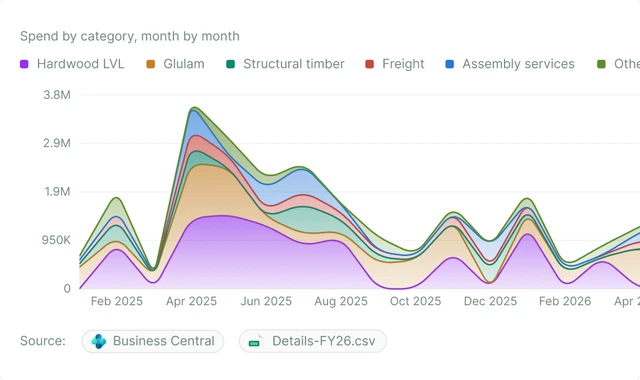
Charts
Ask the agent for a chart of any business or supplier data, and lay commodity prices from FRED and other sources over it. You see at once whether a rise is the market or the supplier.
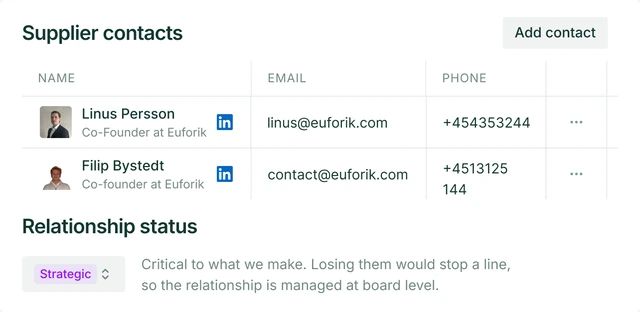
Relationship
Who you deal with there and who owns it here, with the notes your team left on the account beside them.
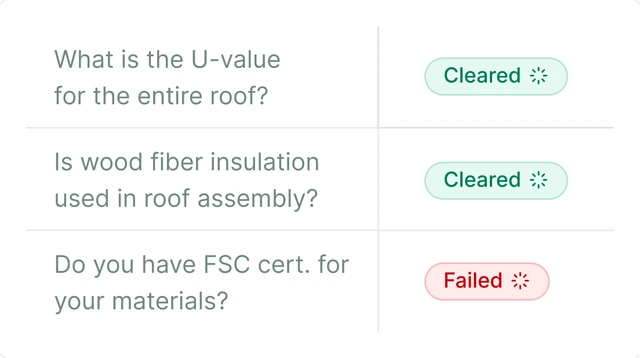
Outreach
RFIs, RFQs and RFPs written and sent for you. Suppliers answer through a link, Euforik follows up, and the replies come back in one place.
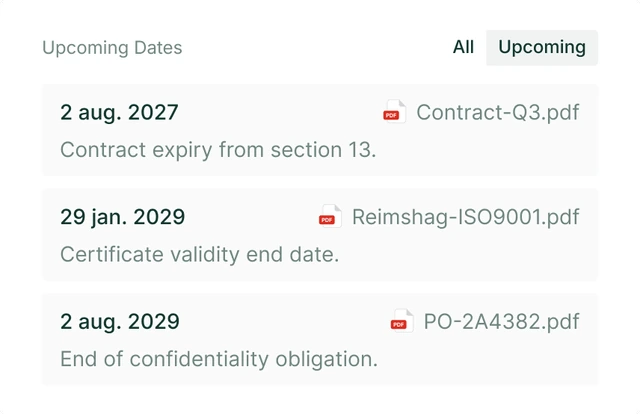
Files and dates
Agreements, certificates and insurance in one place, each with the date it lapses. You hear before it does, not when somebody needs it.
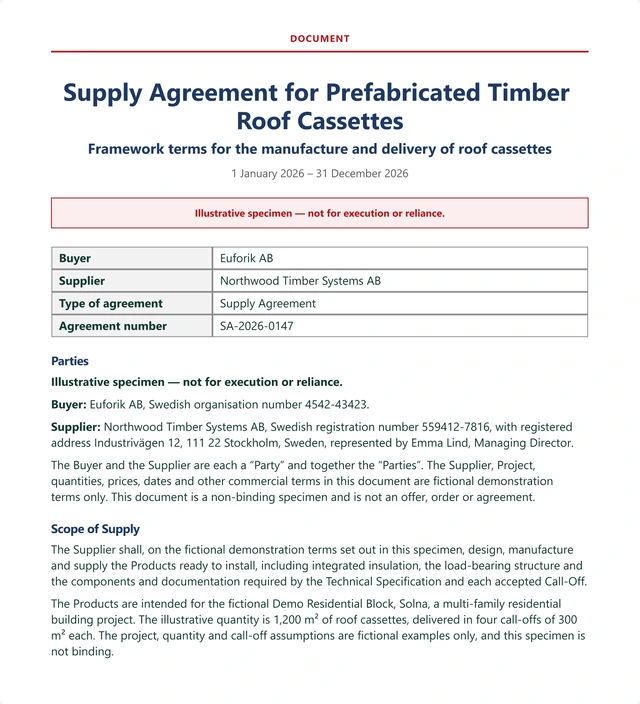
Contract
The agreement drafted in your own template, with everything the supplier committed to already in it.
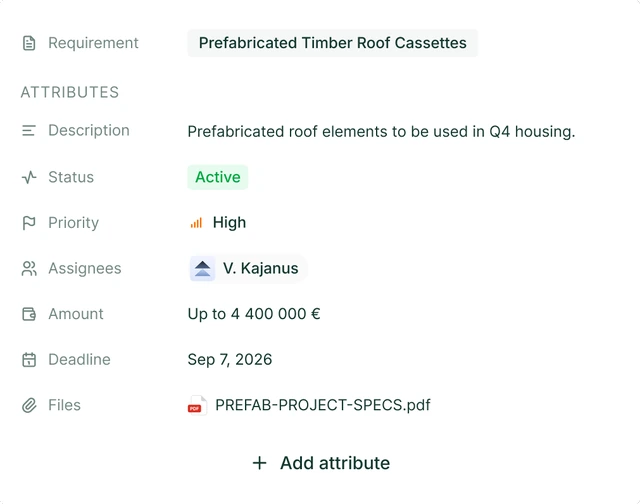
Projects
The work in flight on a board your team shares. Each project carries what it is for, who owns it, what it is worth and the date it is due.
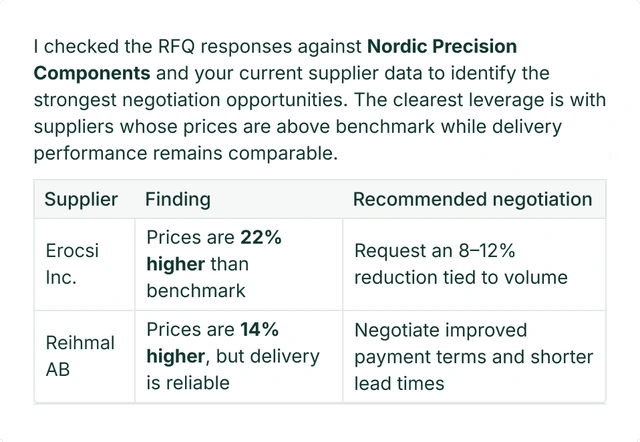
Negotiation
The agent shows where your leverage is, from your own history with a supplier and what the market is doing right now.
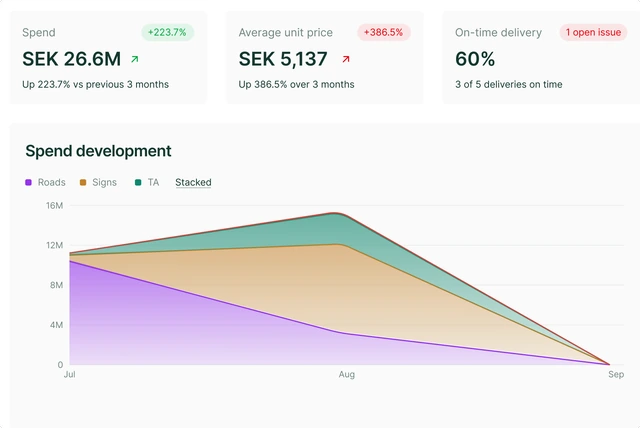
Spend
What you spend with a supplier, read straight off your ERP data. Per category, per period, next to the unit price that moved it.
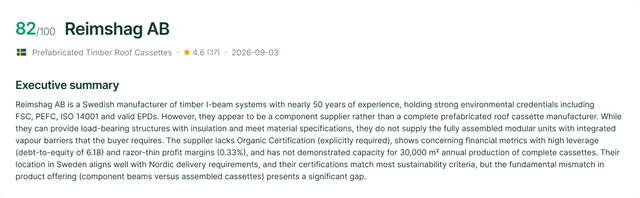
Validation
Every supplier checked against your requirements, from capability and quality to finance and compliance, with the evidence to back it up.
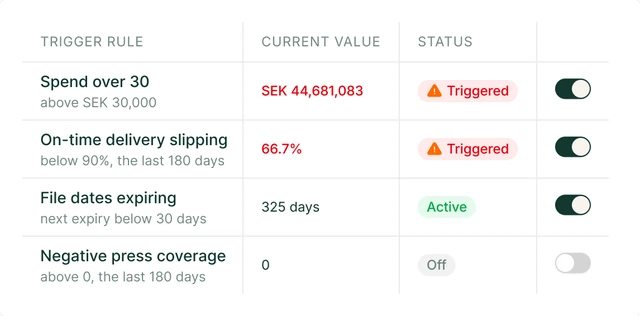
Monitor
Rules you write yourself, checked every night against spend, delivery, expiry dates and the news. You hear when one is crossed.
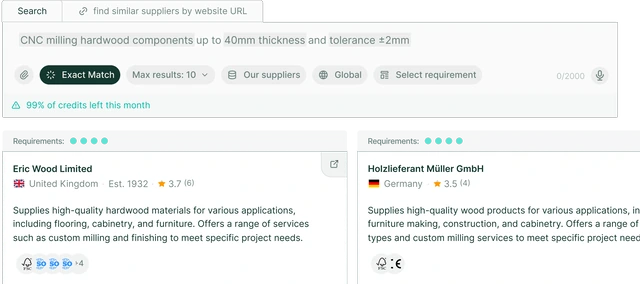
Discovery
One search for direct and indirect suppliers anywhere in the world. Describe what you need in plain language and get suppliers that fit, with the reason each one matched.
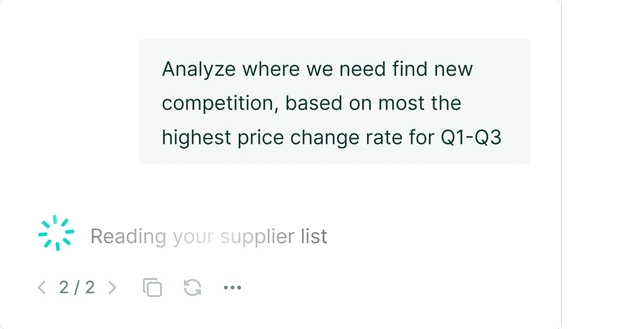
Demand identification
See what you are already buying: spend, prices and renewal dates from your ERP, so the categories worth sourcing and the contracts about to lapse show up early.
So that is what Euforik is. The whole source to contract and SRM loop, AI native rather than AI retrofitted, priced so one person can start on it today, and simple enough that nobody needs a week of training before the first search is worth something.
We are building the smartest, most affordable and easiest to use source to contract and SRM software on the market. We started in Europe because that is where the study was and where the gap is worst. It is not where we intend to stop.